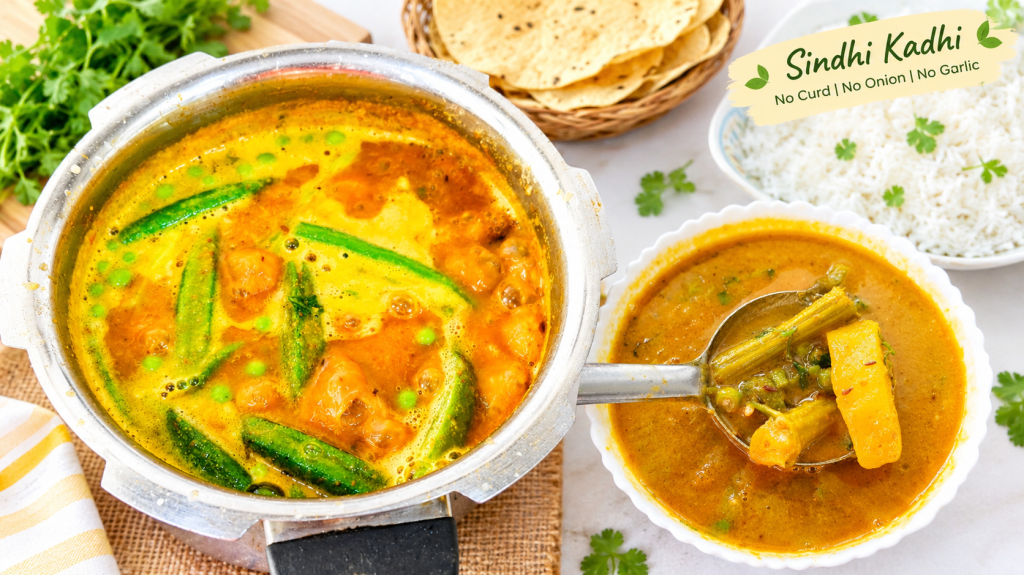
Sindhi kadhi Recipe
Sindhi Kadhi Recipe | Sindhi Kadhi in Pressure Cooker | No Curd Kadhi | Besan Ki Kadhi
2
Have you ever wondered how to make authentic Sindhi Kadhi without curd, onion, or garlic, yet still get that deliciously tangy, aromatic, and satisfying flavour?
This easy Sindhi Kadhi is made with roasted besan, tamarind, potatoes, bhindi, cluster beans, and drumsticks, making it a comforting and wholesome dish that tastes absolutely delicious with plain steamed rice.
Here is the English version detailed, of Sindhi Kadhi Recipe, steps, measurements, cooking details, explanations, FAQs, SEO queries, engagement questions, and Part 1 tips, Part 2 Tips.
Introduction → About the Recipe → Summary → Cooking Time → Equipment → Ingredients → Preparation → Detailed Step-by-Step Recipe → Secret Tip → Serving Ideas → Tiffin Packing → Gifting → Storage → Nutrition → Benefits → Tips & Tricks → FAQs → Search Queries → Audience Engagement → Conclusion → Recipe Card
Sindhi Kadhi, No Curd Kadhi, No Onion No Garlic, Besan Ki Kadhi, and Pressure Cooker Sindhi Kadhi.
🎯 🌟 Your Queries:-
- Sindhi Kadhi Recipe | No Curd Sindhi Kadhi | Easy & Healthy Sindhi Thali Special
- Traditional Sindhi Kadhi Without Curd | Besan Ki Kadhi with Vegetables
- Sindhi Kadhi in Pressure Cooker | Easy No Onion No Garlic Recipe
- Authentic-Style Sindhi Kadhi | Tangy Besan Kadhi Without Curd
- How to Make Delicious Sindhi Kadhi at Home | Easy Sindhi Thali Recipe
❓❓🙋♀️ Let’s Find Out the Answers to These Questions!
- How to Make Sindhi Kadhi Without Curd?
- Can Sindhi Kadhi Be Made Without Yogurt?
- How to Make Smooth, Lump-Free Sindhi Kadhi?
- How Long Should Besan Be Roasted for Sindhi Kadhi?
- When Should Tamarind Be Added to Sindhi Kadhi?
- How to Make Sindhi Kadhi in a Pressure Cooker?
- How to Keep Bhindi from Becoming Slimy in Sindhi Kadhi?
- “Do you love the tangy and comforting taste of traditional Sindhi Kadhi? But what if you do not have curd at home? Today, I am sharing an easy No Curd Sindhi Kadhi made with roasted besan, tamarind, and delicious vegetables.”
🔎 Best main Keywords 🔑
Sindhi Kadhi Recipe, Sindhi Kadhi, Sindhi Kadhi Without Curd, No Curd Sindhi Kadhi, Besan Ki Kadhi, Sindhi Kadhi in Pressure Cooker, Pressure Cooker Sindhi Kadhi, No Onion No Garlic Kadhi, Sindhi Thali Recipe, Traditional Sindhi Kadhi, Easy Sindhi Kadhi Recipe, Healthy Sindhi Kadhi, Vegetable Sindhi Kadhi, Besan Kadhi Recipe, Tamarind Kadhi, Imli Kadhi, Kadhi Without Yogurt, Sindhi Lunch Recipe, Sindhi Dinner Recipe, Traditional Sindhi Recipe, Easy Vegetarian Recipe, Healthy Family Recipe
Busy-Day Special | Easy, Healthy & Delicious
❤️ Sindhi Kadhi Recipe | No Curd, No Onion, No Garlic
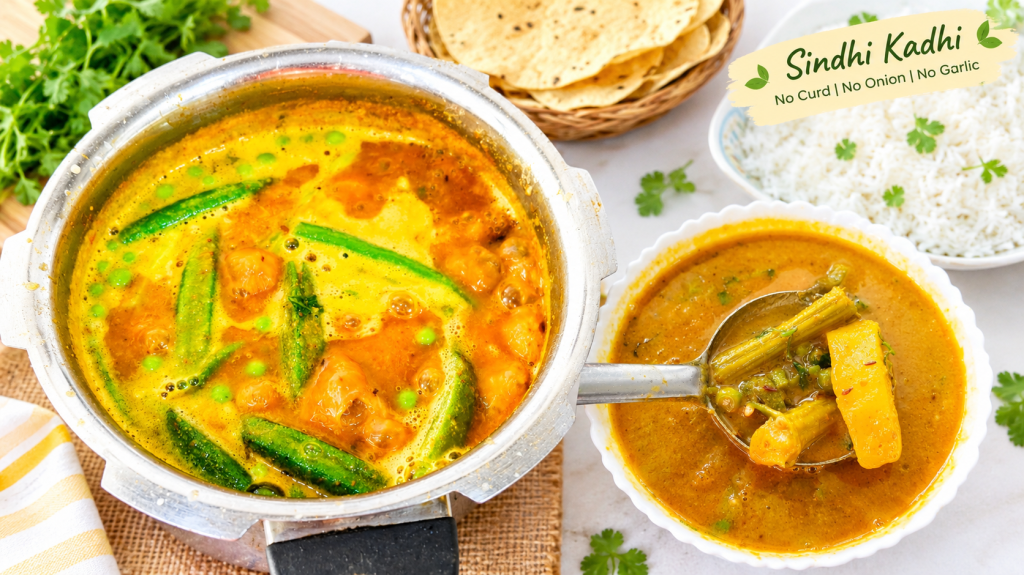
Craving a comforting and flavourful Sindhi Kadhi? 👩🍳✨ This traditional Sindhi recipe is made without curd, onion or garlic and is packed with vegetables, besan and tangy tamarind.
The combination of crispy bhindi, potato, guar beans and drumstick makes this kadhi extra delicious. Serve it hot with steamed rice for a wholesome and satisfying meal. 🍚❤️
⭐ Easy Pressure Cooker Recipe
⭐ No Curd
⭐ No Onion No Garlic
⭐ Traditional Sindhi Flavours
⭐ Perfect with Steamed Rice
❤️ Save this recipe for later and share it with someone who loves traditional Sindhi food!
👩🍳 Follow Meena Manwani Cooking Tutorial for more traditional vegetarian recipes.
This Sindhi Kadhi is perfect for busy weekdays when you want to prepare a comforting homemade meal without using complicated ingredients.
It is also a wonderful choice for:
- Family lunch
- Family dinner
- Weekend brunch
- Sindhi Thali
- Traditional Sindhi occasions
- Vegetarian parties
- Potlucks
- Home get-togethers
- Kids’ family meals
For children, reduce the amount of red chilli powder and green chilli according to their preference.
About This Recipe
Sindhi Kadhi is a traditional Sindhi preparation made primarily with besan or gram flour, vegetables, spices, and a souring ingredient.
Unlike many other kadhi recipes, this version does not require curd or yogurt. Tamarind provides the delicious natural tanginess, while properly roasted besan gives the Kadhi its characteristic depth of flavour.
The combination of potato, bhindi, cluster beans, and drumsticks makes this Kadhi especially hearty and flavourful.
The most important parts of this recipe are:
- Properly frying the bhindi.
- Roasting the besan to the correct colour.
- Adding water while continuously stirring.
- Using only a small quantity of fenugreek seeds.
- Adding tamarind at the correct stage.
Recipe Introduction
❤️ Sindhi Kadhi Recipe | No Curd, No Onion No Garlic | Sindhi Kadhi in Cooker
Looking for a delicious, tangy and comforting Sindhi Kadhi without curd, onion and garlic? ❤️ In this detailed recipe, I’m showing you how to make traditional Sindhi Kadhi in a pressure cooker using besan, bhindi, potato, guar beans, drumstick, tamarind and aromatic spices.
The special taste of this Sindhi Kadhi comes from properly roasted besan, lightly fried bhindi and tangy tamarind. I’ll also share my simple pro tip for roasting besan so your kadhi turns out smooth, flavourful and without lumps. 👩🍳⭐
This easy vegetarian recipe is perfect for lunch, dinner, brunch, busy days, family meals and a traditional Sindhi Thali. Serve it hot with plain steamed rice for a delicious and comforting meal. 🍚❤️
🌿 In This Video You’ll Learn
❤️ How to fry bhindi perfectly
❤️ How to roast besan without burning it
❤️ The correct amount of methi seeds for authentic flavour
❤️ How to make smooth kadhi without lumps
❤️ How to cook the vegetables perfectly in a pressure cooker
❤️ When to add fried bhindi and tamarind
❤️ My Pro Bonus Tip for perfectly roasted besan
If you enjoy traditional vegetarian recipes and easy homemade Indian food, please Like ❤️, Share, Comment and Subscribe to Meena Manwani Cooking Tutorial for more delicious recipes. 👩🍳🌿
Today we are making an easy and delicious Sindhi Kadhi without curd, onion, or garlic.
We will first fry the bhindi until lightly crisp and keep it aside. Then we will prepare the Kadhi base by tempering cumin, a few fenugreek seeds, and hing, followed by slowly roasting besan until beautifully golden.
The roasted besan will then be combined with water and spices before adding potatoes, cluster beans, drumsticks, green chillies, and curry leaves.
After pressure cooking, we will add the fried bhindi, strained tamarind extract, and fresh coriander and give everything a final gentle boil.
Serve it hot with plain steamed white rice for a comforting Sindhi-style meal.
Recipe Summary
✍️ Author Name – 👩🍳 Meena Manwani (Meena Manwani Cooking Tutorial)
- Cuisine: Sindhi / Indian
- Recipe Type: Main Course
- Diet: Vegetarian
- No Curd: Yes
- No Onion: Yes
- No Garlic: Yes
- Cooking Method: Pressure Cooker
- Main Ingredient: Besan / Gram Flour
- Souring Ingredient: Tamarind / Imli
- Best Served With: Plain White Rice
- Difficulty: Easy to Moderate
- Preparation Time: 20–25 minutes
- Cooking Time: 20–25 minutes
- Total Time: Approximately 45–50 minutes
Equipment Used
- Pressure cooker
- Knife
- Chopping board
- Measuring cups and spoons
- Mixing spoon or ladle
- Small bowl for soaking tamarind
- Plate for fried bhindi
- Fine strainer
Ingredients
Vegetables
Ingredient
Quantity
Medium potato
1, approximately 120–130 g
Bhindi / Okra
6–8 pieces, approximately 80–100 g
Cluster beans / Guar beans
12–15 pieces, approximately 100 g
Drumsticks
2, approximately 150–180 g
Green chillies
2
Curry leaves
2 stems
Fresh coriander
2–3 tbsp, finely chopped
For the Kadhi
Ingredient
Quantity
Besan / Gram flour
¼ cup, approximately 30–32 g
Oil
2–3 tbsp, approximately 30–45 ml
Cumin seeds
1 tsp, approximately 2 g
Fenugreek seeds
¼ tsp, only 6–8 seeds
Asafoetida / Hing
¼ tsp
Turmeric powder
½ tsp
Red chilli powder
1 tsp
Salt
1½ tsp, or according to taste
Water
4 cups, approximately 950 ml
For the Tamarind Extract
Ingredient
Quantity
Tamarind / Imli
2 tbsp, approximately 25–30 g
Warm water
Approximately ½ cup
Preparation
Before starting the cooking process, prepare and measure all the ingredients.
Sindhi Kadhi requires several ingredients to be added at different stages, so keeping everything ready beforehand makes the cooking process much easier and prevents the besan from getting over-roasted while you prepare another ingredient.
Serve a moderate portion with plain rice or jeera rice.
Step-by-Step Sindhi Kadhi Recipe
Step 1 – Soak the Tamarind
1️⃣ Take 2 tbsp tamarind in a small bowl.
2️⃣ Add approximately ½ cup warm water.
3️⃣ Allow it to soak for 15–20 minutes so that the tamarind softens properly.
4️⃣ Keep it aside while preparing the vegetables.
Why soak the tamarind first?
Soaking softens the tamarind and makes it much easier to extract the pulp later.
Step 2 – Prepare the Vegetables
Potato
1️⃣ Peel 1 medium potato.
2️⃣ Cut it into long, thick strips.
3️⃣ Immediately place the potato pieces in a bowl of water.
4️⃣ Keep aside.
Why keep the potato in water?
It prevents the potato from discolouring and keeps the surface fresh while you prepare the remaining vegetables.
Bhindi / Okra
1️⃣ Wash the bhindi thoroughly.
2️⃣ Pat it completely dry using a clean kitchen towel.
3️⃣ Cut off the top and bottom ends.
4️⃣ Make one slit lengthwise through each bhindi without cutting it completely into two pieces.
5️⃣ Keep aside.
Important:
Make sure the bhindi is properly dry before frying. Excess moisture can increase the sliminess of okra.
Cluster Beans / Guar Beans
1️⃣ Wash the cluster beans.
2️⃣ Cut off both ends.
3️⃣ Cut them into medium-sized pieces.
4️⃣ Keep aside.
Drumsticks
1️⃣ Wash the drumsticks.
2️⃣ Peel the outer skin lightly.
3️⃣ Cut them into approximately 2-inch pieces.
4️⃣ Keep aside.
Step 3 – Heat the Oil
1️⃣ Place the pressure cooker on the stove.
2️⃣ Add 2–3 tbsp oil.
3️⃣ Heat the oil over medium flame for approximately 1–2 minutes.
4️⃣ The oil should be hot but should not be smoking.
Step 4 – Fry the Bhindi
1️⃣ Add the prepared bhindi to the hot oil.
2️⃣ Fry over medium flame.
3️⃣ Stir gently at regular intervals so the bhindi cooks evenly.
4️⃣ Fry for approximately 4–6 minutes, depending on the size and moisture content of the bhindi.
5️⃣ Continue cooking until the bhindi becomes lightly golden and crisp on the outside.
6️⃣ Remove the fried bhindi onto a plate.
7️⃣ Keep it aside.
How do you know the bhindi is ready?
The bhindi should look lightly golden, feel less moist, and have a slightly crisp exterior.
Do not fry it until very dark or burnt.
Why fry the bhindi separately?
If bhindi is pressure cooked from the beginning, it can become very soft and release more sliminess into the Kadhi.
Adding the fried bhindi later helps retain better texture and flavour.
Step 5 – Temper the Kadhi Base
Keep the remaining hot oil in the pressure cooker.
Reduce the flame to low-medium.
Add cumin seeds
1️⃣ Add 1 tsp cumin seeds.
2️⃣ Allow them to crackle for approximately 20–30 seconds.
Add fenugreek seeds
1️⃣ Add only ¼ tsp fenugreek seeds, approximately 6–8 seeds.
2️⃣ Stir gently for a few seconds.
Why use only a small amount of fenugreek?
Fenugreek seeds add a subtle earthy aroma and traditional flavour to the Kadhi.
However, they can become bitter if used in excess.
That is why only 6–8 seeds are enough for this quantity of Kadhi.
Add asafoetida
1️⃣ Add ¼ tsp hing.
2️⃣ Stir for only a few seconds.
3️⃣ Do not allow the hing to burn.
Step 6 – Add and Roast the Besan
This is one of the most important steps in the entire recipe.
1️⃣ Immediately add ¼ cup besan.
2️⃣ Reduce the flame to low.
3️⃣ Start stirring continuously.
4️⃣ Roast the besan slowly and evenly.
5️⃣ Continue stirring for approximately 4–6 minutes.
How to roast the besan perfectly
At first, the besan will look pale and may have a raw flour smell.
As you continue roasting:
- The raw smell will gradually disappear.
- The besan will become aromatic.
- Its colour will slowly change from pale yellow to golden.
- The texture will become smoother.
Continue roasting until the besan reaches a beautiful golden-brown colour similar to a Parle-G biscuit.
Do not rush this step.
If the besan is under-roasted, the Kadhi can have a raw flour taste.
If it is over-roasted, it can become dark and bitter.
The ideal stage is:
Golden brown + aromatic + no raw besan smell.
⭐ Secret Tip – Important Live Cooking Step
The moment the besan reaches the correct golden colour, add the water immediately.
Do not leave the roasted besan sitting on the hot cooker for a long time.
The residual heat from the cooker and oil will continue cooking it, and the besan can quickly become darker.
Golden-brown besan + immediate addition of water = better roasted flavour without bitterness.
Step 7 – Add Water Without Lumps
1️⃣ Keep the flame on low.
2️⃣ Take the measured 4 cups water.
3️⃣ Start pouring the water slowly with one hand.
4️⃣ At the same time, continuously stir the besan mixture with the other hand.
5️⃣ Keep stirring from the bottom and sides of the cooker.
6️⃣ Once all the water has been added, mix thoroughly.
7️⃣ Increase the flame to medium.
Why add water slowly while stirring?
When hot roasted besan comes into contact with water, it can quickly form lumps.
Continuous stirring helps the besan dissolve evenly and produces a smooth Kadhi.
Step 8 – First Boil
1️⃣ Bring the mixture to a proper boil over medium flame.
2️⃣ Once it starts boiling, continue boiling for approximately 2–3 minutes.
3️⃣ Stir occasionally.
The Kadhi base will begin to look smooth and slightly thicker.
Step 9 – Add the Spices
Add:
- 1½ tsp salt
- 1 tsp red chilli powder
- ½ tsp turmeric powder
1️⃣ Mix everything well.
2️⃣ Allow the Kadhi to boil for another 1–2 minutes over medium flame.
Step 10 – Add the Vegetables
Now add the vegetables that require pressure cooking.
Add the potato
1️⃣ Drain the potato pieces.
2️⃣ Add them to the Kadhi.
Add the cluster beans
3️⃣ Add the prepared cluster beans.
Add the drumsticks
4️⃣ Add the prepared 2-inch drumstick pieces.
Add the green chillies
5️⃣ Make small slits in 2 whole green chillies.
6️⃣ Add them to the cooker.
Add curry leaves
7️⃣ Add 2 stems of curry leaves.
8️⃣ Mix everything gently.
Step 11 – Bring the Kadhi to a Boil
1️⃣ Increase the flame to medium.
2️⃣ Allow the Kadhi and vegetables to come to one good boil.
3️⃣ Stir gently once.
Important:
Do not add the fried bhindi at this stage.
Keep it aside until after pressure cooking.
Step 12 – Pressure Cook
1️⃣ Close the pressure cooker with the lid.
2️⃣ Cook on low flame for approximately 10 minutes.
3️⃣ Do not deliberately cook for multiple whistles.
4️⃣ Allow the pressure to build naturally according to your pressure cooker’s normal operation.
Important safety note
Pressure cookers vary by design. Follow the manufacturer’s instructions for pressure release, and never force the lid open while the cooker is still pressurised.
Step 13 – Rest the Kadhi
1️⃣ After approximately 10 minutes, turn off the flame.
2️⃣ Allow the cooker to rest for approximately 5–10 minutes, or until the pressure has safely reduced.
3️⃣ Do not force the pressure release unless your cooker instructions specifically allow it.
Meanwhile, prepare the tamarind extract.
Step 14 – Prepare the Tamarind Extract
1️⃣ Take the soaked tamarind.
2️⃣ Mash it thoroughly with your fingers in the soaking water.
3️⃣ Squeeze the pulp well.
4️⃣ Strain the mixture through a fine strainer.
5️⃣ Press the tamarind pulp against the strainer to extract as much smooth pulp as possible.
6️⃣ Discard the seeds and fibrous material.
7️⃣ Keep the smooth tamarind extract ready.
Step 15 – Check the Vegetables
1️⃣ Open the pressure cooker only after the pressure has reduced safely.
2️⃣ Turn the flame back on to medium.
3️⃣ Insert a knife into one piece of potato.
Perfect texture:
The knife should enter the potato easily.
The potato should be tender but should still hold its shape.
4️⃣ Check the cluster beans and drumsticks as well.
Step 16 – Add the Fried Bhindi
1️⃣ Add the fried bhindi that was kept aside.
2️⃣ Mix very gently.
Why add bhindi now?
Adding it after pressure cooking helps retain more of its fried texture and prevents it from becoming excessively soft or slimy.
Step 17 – Add Tamarind
1️⃣ Add the strained tamarind extract.
2️⃣ Mix gently.
3️⃣ Taste the Kadhi.
4️⃣ If your tamarind is particularly sour, add the extract gradually rather than adding all of it at once.
Why add tamarind near the end?
It gives you better control over the final sourness and helps preserve the fresh tangy flavour of the tamarind.
Step 18 – Add Fresh Coriander
1️⃣ Add 2–3 tbsp finely chopped fresh coriander.
2️⃣ Mix gently.
Step 19 – Final Boil
1️⃣ Bring the Kadhi to a gentle boil over medium flame.
2️⃣ Cook for only 2–3 minutes.
3️⃣ Taste and adjust salt or tamarind if necessary.
4️⃣ Turn off the flame.
Do not over-boil at this stage.
Once the bhindi and tamarind have been added, only a short final boil is required.
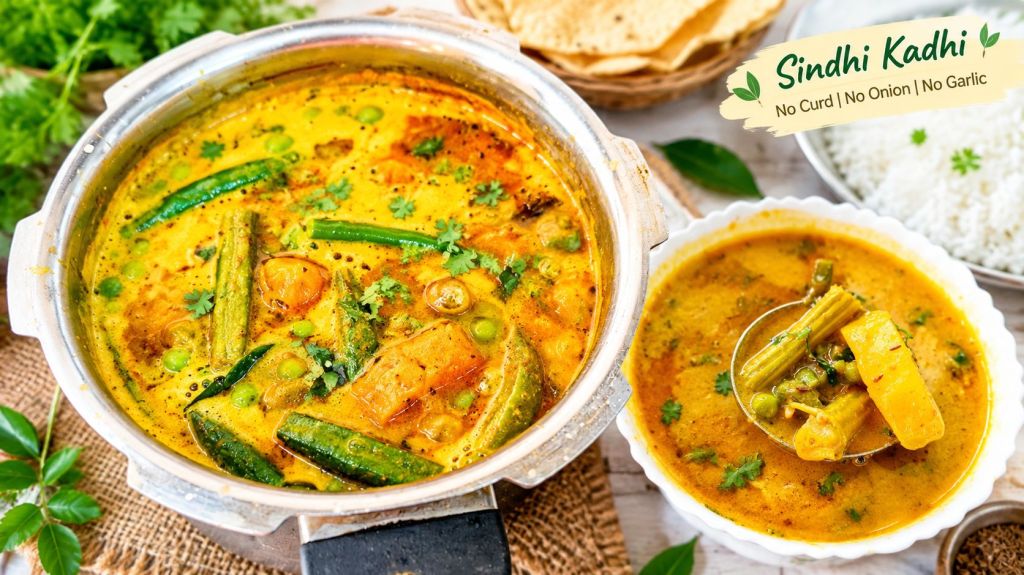
🍚 Your Sindhi Kadhi Is Ready!
Your delicious No Curd Sindhi Kadhi is now ready to serve.
It should be:
- Smooth
- Aromatic
- Tangy
- Comforting
- Lightly spiced
- Filled with tender vegetables
- Enhanced with fried bhindi
🍚 What to Serve With Sindhi Kadhi
The classic and simplest pairing is:
Hot Sindhi Kadhi + Plain Steamed White Rice
You can also serve it with:
- Jeera rice
- Steamed basmati rice
- Sindhi papad
- Pickle
- Simple salad
- Roasted papad
- A simple dry vegetable
🍽️ Serving Ideas
Family Lunch
Serve hot Sindhi Kadhi with steamed white rice, papad, and pickle.
Family Dinner
Weekend Brunch
Make it part of a simple Sindhi-style brunch with rice, papad, and a dry vegetable.
Sindhi Thali
Create a traditional-style thali with:
Sindhi Kadhi + steamed rice + Sindhi Aloo + papad + pickle + salad
Party / Get-Together
Serve the Kadhi in a large serving bowl with steamed rice as part of a vegetarian buffet.
🥡 How to Pack Sindhi Kadhi in a Tiffin Box
1️⃣ Allow the Kadhi to cool slightly before packing.
2️⃣ Use a clean, leak-proof container.
3️⃣ Pack the rice separately.
4️⃣ Keep papad separately so it remains crisp.
5️⃣ If packing for children, reduce the chilli.
6️⃣ Keep the containers upright during transportation.
🎁 How to Pack It for Gifting
For short-distance gifting:
1️⃣ Allow the Kadhi to cool slightly.
2️⃣ Transfer it into a clean, food-safe, leak-proof container.
3️⃣ Pack rice separately.
4️⃣ Keep papad and other crispy accompaniments separately.
5️⃣ Use an insulated food bag if needed.
For longer transportation, keep the food properly chilled.
❄️ Storage & Shelf Life
Refrigerator
Allow the Kadhi to cool appropriately and transfer it to an airtight container.
It can generally be refrigerated for approximately 2–3 days when handled and stored properly.
Reheating
1️⃣ Transfer only the required quantity to a saucepan.
2️⃣ Reheat gently over medium-low flame.
3️⃣ If it has thickened during refrigeration, add a little water.
4️⃣ Stir well.
5️⃣ Bring it to a gentle simmer before serving.
Important
Avoid repeatedly reheating and cooling the entire batch. Reheat only the portion you intend to consume.
🌿 Benefits & Uses
This recipe provides:
- Plant-based protein from besan
- Fibre and nutrients from vegetables
- A variety of vegetables in one dish
- A naturally tangy flavour from tamarind
- A satisfying homemade meal when paired with rice
It can be used as:
- Everyday lunch
- Family dinner
- Weekend meal
- Sindhi Thali preparation
- Vegetarian party dish
- Traditional occasion recipe
- Comfort food
Nutrition and benefits vary depending on ingredients, oil quantity, serving size, and what the Kadhi is served with.
📊 Approximate Nutrition
For the complete Kadhi recipe, using approximately 2½ tbsp oil:
Entire Recipe
- Calories: approximately 750–850 kcal
- Protein: approximately 18–22 g
Per Serving – if divided into 6 servings
- Calories: approximately 125–140 kcal
- Protein: approximately 3–4 g
Note: These are approximate values and do not include the rice served with the Kadhi.
⭐ PRO BONUS TIP
🔥 The perfect besan colour is one of the biggest secrets to delicious Sindhi Kadhi.
As soon as the raw smell disappears and the besan becomes golden brown like a Parle-G biscuit, immediately add the water while stirring continuously.
This helps give the Kadhi a beautifully roasted, rich flavour without making the besan bitter.
❓ Frequently Asked Questions
Can I make Sindhi Kadhi without curd?
Yes. This recipe is specifically made without curd or yogurt. Tamarind provides the required tanginess.
Can I make Sindhi Kadhi without onion and garlic?
Yes. This recipe contains neither onion nor garlic.
Why did my Sindhi Kadhi become bitter?
Possible reasons include using too many fenugreek seeds, burning the hing, or over-roasting the besan.
Why does my Kadhi have lumps?
The most common reason is adding water too quickly without continuous stirring.
Why does my Kadhi taste raw?
The besan may not have been roasted sufficiently. Continue roasting until the raw smell disappears and the besan becomes aromatic and golden.
Can I add bhindi directly before pressure cooking?
You can, but the bhindi may become very soft and slimy. Frying it hyseparately and adding it later gives better texture.
Can I make Sindhi Kadhi without drumsticks?
Yes. Drumsticks can be omitted if they are unavailable.
Can I add more vegetables?
Yes. You can adjust the vegetables according to availability while maintaining the overall liquid-to-vegetable balance.
Can I use more tamarind?
Yes, but add it gradually because tamarind can vary significantly in sourness.
Can I make Sindhi Kadhi without a pressure cooker?
Yes. Use a heavy-bottomed pot and cook the vegetables covered until tender. The cooking time will be longer.
Why did my Kadhi become too thick?
Besan naturally thickens as it cooks and also continues absorbing liquid as the Kadhi cools. Add a little hot water while reheating and adjust the consistency.
Why is my Kadhi too thin?
Simmer it gently for a few additional minutes. Avoid adding dry besan directly because it can create lumps.
🎯 What Queries Does This Recipe Answer?
This recipe answers the following useful search queries:
- How to make Sindhi Kadhi?
- How to make Sindhi Kadhi without curd?
- How to make Sindhi Kadhi in a pressure cooker?
- How to make Besan Ki Kadhi without yogurt?
- How to make No Onion No Garlic Kadhi?
- What can I use instead of curd in Sindhi Kadhi?
- How to make lump-free Besan Kadhi?
- How long should besan be roasted for Sindhi Kadhi?
- How much fenugreek should be added to Sindhi Kadhi?
- When should tamarind be added to Sindhi Kadhi?
- How to make vegetable Sindhi Kadhi?
- What vegetables are used in Sindhi Kadhi?
- How to make Sindhi Thali Kadhi?
- What should I serve with Sindhi Kadhi?
- How to make easy Sindhi Kadhi at home?
- How to make Sindhi Kadhi without onion and garlic?
- How to make Sindhi Kadhi without curd and yogurt?
🎯 💭 Your Feedback Matters to Us
- “Have you ever made Sindhi Kadhi without curd? Which vegetable do you love most in Sindhi Kadhi—bhindi, potato, cluster beans, or drumstick? Let me know in the comments below! ❤️👇”
- “Do you prefer Sindhi Kadhi with plain white rice or jeera rice? 🍚 Tell me your favourite combination in the comments!”
❤️ Conclusion
This Sindhi Kadhi without curd, onion, or garlic is a simple yet incredibly flavourful homemade recipe. The combination of beautifully roasted besan, tangy tamarind, tender vegetables, and separately fried bhindi gives this Kadhi its delicious traditional character.
Serve it piping hot with plain steamed white rice, papad, and pickle, and you have a comforting Sindhi-style meal that is perfect for both everyday cooking and a special Sindhi Thali.
“And our delicious Sindhi Kadhi is now perfectly ready! Serve it hot with plain steamed white rice and enjoy this comforting Sindhi-style meal with your family. If you enjoyed this traditional and easy recipe, don’t forget to save, share, and follow for more delicious homemade recipes.”
⭐👩🍳 Sindhi Kadhi Recipe | No Curd, No Onion No Garlic | Besan Ki Kadhi in Pressure Cooker Recipe – Step by Step with Pictures :-
1️⃣ Heat 2–3 tbsp oil in a pressure cooker and fry the bhindi until lightly crisp. Remove and keep aside.
2️⃣ In the same oil, add 1 tsp cumin, 6–8 methi seeds and ¼ tsp hing. Let them splutter gently.
3️⃣ Add ¼ cup besan and roast on low flame, stirring continuously until golden brown and aromatic.
⭐ SECRET TIP: As soon as the besan turns golden brown like a Parle-G biscuit, immediately add water while stirring continuously to prevent burning and lumps.
4️⃣ Slowly add 4 cups water, stirring continuously. Bring it to a good boil.
5️⃣ Add 1½ tsp salt, 1 tsp red chilli powder and ½ tsp turmeric. Boil for 1–2 minutes.
6️⃣ Add potato, guar beans, drumsticks, green chillies and curry leaves. Close the cooker and cook on low flame for about 10 minutes.
7️⃣ Release the pressure safely, then check that the potatoes are tender.
8️⃣ Add the fried bhindi, strained tamarind water and 2–3 tbsp chopped coriander.
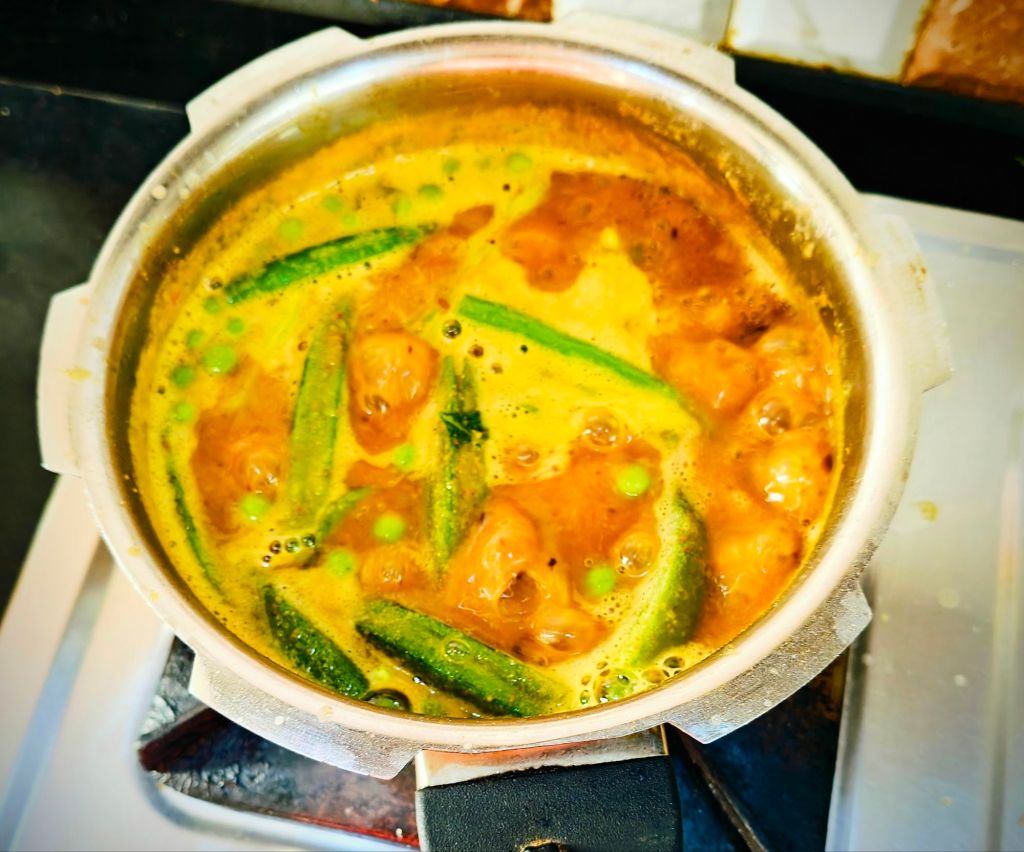
9️⃣ Mix gently and boil for 2–3 minutes.
🔟 Sindhi Kadhi is ready! Serve hot with plain steamed rice. ❤️🍚
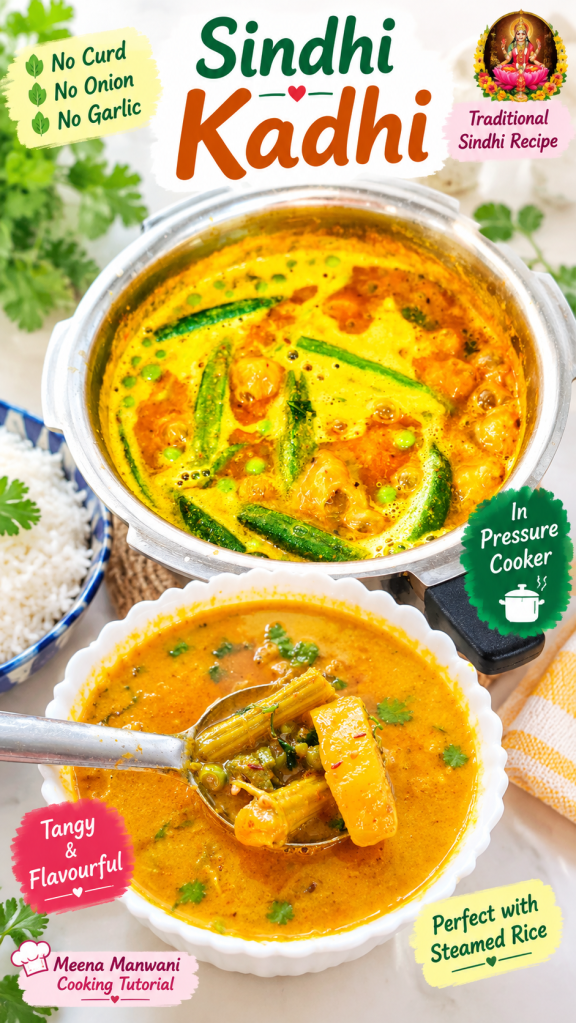
❤️ Sindhi Kadhi – 1-Minute Recipe
🥣 SINDHI KADHI RECIPE
1️⃣ 🫑 Fry bhindi until lightly crisp and keep aside
2️⃣ 🌿 Temper cumin, methi seeds and hing in the same oil
3️⃣ 🥣 Add besan and roast on low flame until golden and aromatic
4️⃣ 💧 Add water slowly while stirring continuously
5️⃣ 🧂 Add salt, red chilli powder and turmeric
6️⃣ 🥔 Add potato, guar beans, drumsticks, green chillies and curry leaves
7️⃣ 🔥 Pressure cook on low flame for about 10 minutes
8️⃣ 🍋 Add strained tamarind water and fried bhindi
9️⃣ 🌿 Add fresh coriander and boil for 2 to 3 minutes
🍚 Serve hot with steamed rice
⭐ PRO BONUS TIP
🔥 Roast besan patiently on low flame until perfectly golden, then add water immediately while stirring continuously for a smooth, lump free Sindhi Kadhi
❤️⭐👩🍳 Instructions – Easy Short Steps
1️⃣ Fry → Bhindi + Oil → Crisp
2️⃣ Temper → Cumin + Methi + Hing
3️⃣ Roast → Besan → Golden
4️⃣ Add → Water + Spices → Boil
5️⃣ Add → Potato + Guar Beans + Drumstick + Green Chilli + Curry Leaves
6️⃣ Cook → Pressure Cooker → Low Flame → 10 Minutes
7️⃣ Add → Tamarind Water + Fried Bhindi
8️⃣ Finish → Coriander → Boil 2–3 Minutes
🍚 Serve → Hot Sindhi Kadhi + Steamed Rice
⭐👩🍳 PRO BONUS TIP
🔥 Roast → Besan → Golden → Add Water Immediately + Stir Continuously
✓
⭐️⭐️ SINDHI KADHI – TIPS & TRICKS | PART 1 ⭐️⭐️
⭐ Sindhi Kadhi – 1-Minute Tips & Tricks | Part 1
1️⃣ Dry the bhindi completely before frying for a better, less-slimy texture.
2️⃣ Use only 6–8 fenugreek seeds to add traditional flavour without bitterness.
3️⃣ Roast besan on low flame, stirring continuously until golden brown and aromatic.
4️⃣ Keep the potato pieces in water after cutting to prevent discoloration.
5️⃣ Add fried bhindi after pressure cooking to retain its texture and flavour.
6️⃣ Add tamarind gradually and adjust according to its sourness.
⭐ SECRET TIP: As soon as the besan turns golden brown like a Parle-G biscuit, immediately add water while stirring continuously to prevent burning and lumps. 🔥🥣
⭐️⭐️ SINDHI KADHI – TIPS & TRICKS | PART 2 ⭐️⭐️
❤️ Sindhi Kadhi Tips & Tricks | Part 2 👩🍳✨
Want to make your Sindhi Kadhi perfectly smooth, flavourful and delicious? 🥣🌿 In Part 2, I’m sharing simple tips for adding water, cooking the vegetables, using tamarind and getting the perfect final consistency.
⭐ Add water slowly while stirring
⭐ Cut vegetables evenly for even cooking
⭐ Strain tamarind water before adding
⭐ Add fried bhindi at the right time
⭐ Simmer for a few minutes to blend all the flavours
👩🍳 Pro Bonus Tip: After adding tamarind and bhindi, simmer the kadhi for 2 to 3 minutes so all the flavours blend beautifully. ❤️
⭐ Sindhi Kadhi – 1-Minute Tips & Tricks | Part 2
1️⃣ 🥣 Add water slowly → Keep stirring continuously → Lump free kadhi
2️⃣ 🔥 Bring the kadhi to a good boil → Then add vegetables → Better flavour
3️⃣ 🥔 Cut vegetables evenly → Even cooking
4️⃣ 🌿 Add green chillies + curry leaves → More aroma and flavour
5️⃣ 🧂 Check salt after adding tamarind → Adjust to taste
6️⃣ 🍋 Strain tamarind water → Smooth kadhi without seeds or fibres
⭐👩🍳 PRO BONUS TIP
🥄 After adding tamarind and bhindi → Simmer for 2 to 3 minutes → Let all the flavours blend beautifully ❤️n
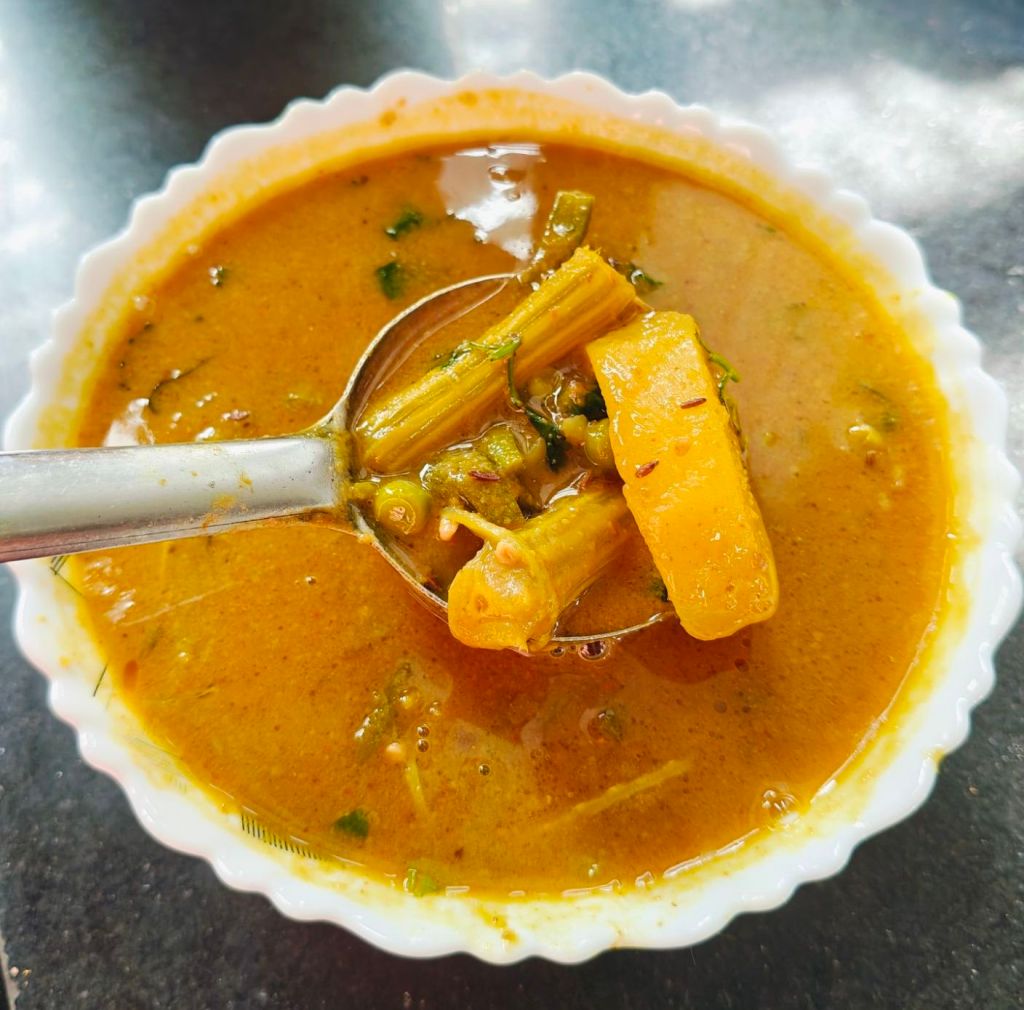
🎥 For the complete Sindhi Kadhi recipe with exact measurements and step by step instructions, watch the full recipe video on my YouTube channel.
❤️ Like, Save, Share and Follow for more traditional vegetarian recipes.
🎥 THIS RECIPE IN VIDEO
👉 Save this recipe & try today ❤️
👉 ❤️ Don’t forget to LIKE, SHARE & SUBSCRIBE for more easy & delicious recipes
❤️ If you enjoy this recipe, pleaseLike, Share, Comment and SubscribetoMeena Manwani Cooking Tutorialfor more easy, healthy and delicious recipes.
——————–
🎯 ★★ If you like this recipe, you can also try other recipes such as :-
★Brown pulao (sindhi bhuga chawanr)
★Perfect Idli & Idli batter
★Green moong dal khichdi
★Green moong dal curry
★Methi na dhebra (gujrati recipe)
★Boiled aloo ki sabzi
★Palak chana dal sabzi (sindhi sai bhaji)
★Paneer bhurji
★Aloo ki sukhi sabzi (aloo fry)
★Kala chana sabzi
★Mutter paneer
★Kamal kakdi ki sabzi (sindhi bhee patata)
★ Pattagobhi-mutter ki sabzi
★ Methi-mutter-aloo ki sabzi
★ METHI PARATHA
Thank you so much for visiting our recipe blog.
Your reviews are heartily invited.
आपको मेरा यह आर्टिकल अगर पसंद आया हो तो इसे लाइक और शेयर करें, साथ ही ऐसी ही रेसिपीस के लिए Meena Manwani Cooking Tutorial के साथ जुड़े रहें।


Leave a comment